When Were Pocket Watches Invented? A Short History
- When were pocket watches invented?
- What came before the pocket watch?
- Who made the first portable watches?
- How did the vest change things?
- When did pocket watches become accurate?
- What is the timeline at a glance?
- What was the railroad era?
- Why did wristwatches take over?
- Why do people still wear them?
- How did the case styles develop?
- Are old pocket watches collectible?
- Which makers shaped the pocket watch?
- What did a pocket watch symbolize?
- What do the old terms mean?
- How did glass and cases improve?
- Why are pocket watches given as gifts?
- How do you start with a modern one?
- FAQ
- References & Sources
Ready to look? Browse all pocket watches and fob watches at FOB & Co, or read our short history of pocket watches.
When were pocket watches invented?

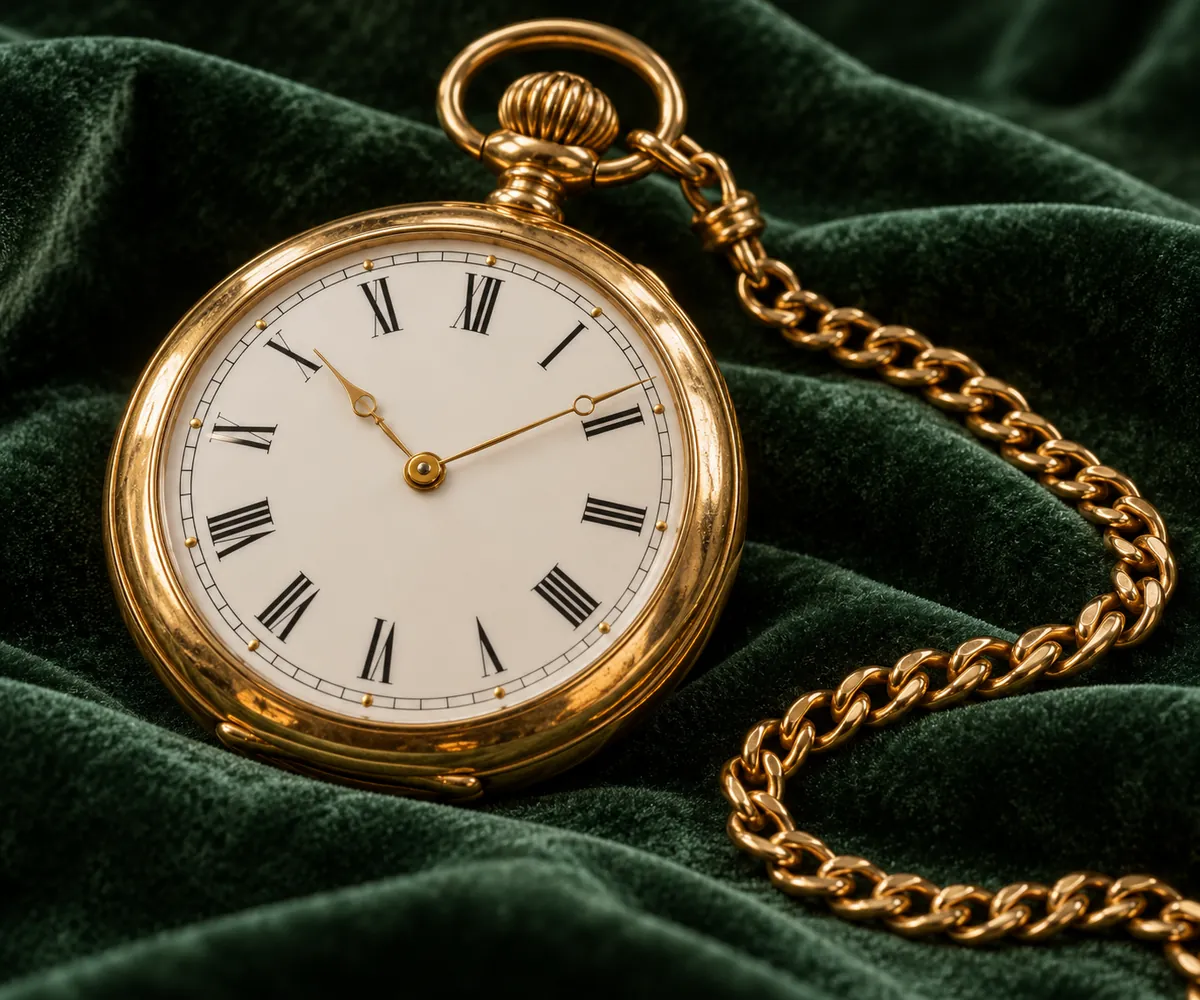
Pocket watches date from the early 1500s. Before then, clocks were large, driven by weights, and fixed in towers or on walls. The invention of the coiled mainspring in the 15th century made it possible to build small clocks that could be carried, and by the early 1500s craftsmen in German cities such as Nuremberg were making them. The pocket watch article on Wikipedia gives the full outline.
The first portable timepieces were not yet pocket sized. They were worn on a chain around the neck or attached to clothing, and they were as much a piece of jewelry as a tool for telling time. The shift to a true pocket watch came later, as styles and tailoring changed.
What came before the pocket watch?
Early timekeeping relied on sundials, water clocks and candles, and later on mechanical clocks driven by falling weights. These were accurate enough for a town, but they could not travel. The mainspring solved that problem by storing energy in a coiled spring, and that made a watch possible. The watch article on Wikipedia traces the way timekeeping moved from the tower to the person.
Who made the first portable watches?
Peter Henlein, a locksmith and clockmaker from Nuremberg, is commonly credited with making some of the first portable watches in the early 1500s. His small, drum-shaped timepieces were nicknamed Nuremberg eggs, although historians debate the details of how early they were made. The Peter Henlein article on Wikipedia summarizes what is known and what is disputed.
How did the vest change things?
In the 1600s, men’s fashion introduced the waistcoat, also called the vest, and it gave the watch a natural home. A pocket in the vest kept the watch close to the body, and a chain across the front made it part of the outfit. The waistcoat article on Wikipedia describes how the garment developed. From then on, the pocket watch and the vest went together, and that pairing still defines the classic look.
When did pocket watches become accurate?
The early watches could lose or gain many minutes a day. A big step forward came in the 1600s with the balance spring, which made the watch keep much steadier time. The balance spring article on Wikipedia explains how the spring regulates the movement. Over the next two centuries, makers improved escapements, jewels and temperature compensation until a good pocket watch could keep time to within seconds a day.
What is the timeline at a glance?
This table gives the main steps in order.
| Period | Development |
|---|---|
| 1400s | The coiled mainspring makes small, portable clocks possible |
| Early 1500s | Portable watches appear in German cities such as Nuremberg |
| 1600s | The vest arrives and the balance spring improves accuracy |
| 1800s | Mass production and the railroads make accuracy a necessity |
| Early 1900s | Wristwatches overtake pocket watches |
| Today | Pocket watches are worn for style, gifts and collecting |
What was the railroad era?
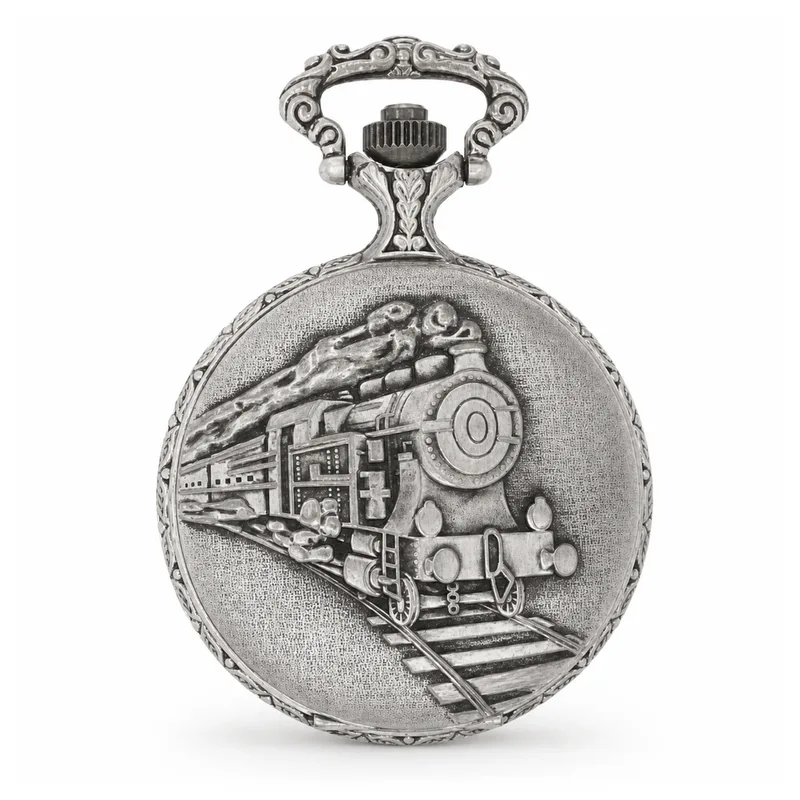
In the 1800s, railroads needed everyone to agree on the time, because trains on a shared track could not rely on local clocks. Railroad companies set standards for accurate watches, and workers carried them. The railroad chronometer article on Wikipedia describes the standards. This period produced some of the most admired American and European pocket watches, and it made a reliable watch a common possession.
Why did wristwatches take over?
Wristwatches began as women’s jewelry in the 1800s, and military use in the early 1900s showed how practical they were. Soldiers needed to read the time without taking a hand off a rifle or a rein, and the wristwatch won on convenience. After the First World War, men adopted the wristwatch widely, and the pocket watch moved from daily use to formal wear. The wristwatch article on Wikipedia covers the shift.
Why do people still wear them?
A pocket watch is a statement. It says the wearer values craft, tradition and detail, and it stands out from the smartwatches and phones most people carry. Pocket watches are popular at weddings, where groomsmen wear matching ones, and they are given as gifts to mark graduations, birthdays and retirements. They are also part of a growing taste for heritage style, with the watch and chain worn with a vest or a tweed jacket.
How did the case styles develop?
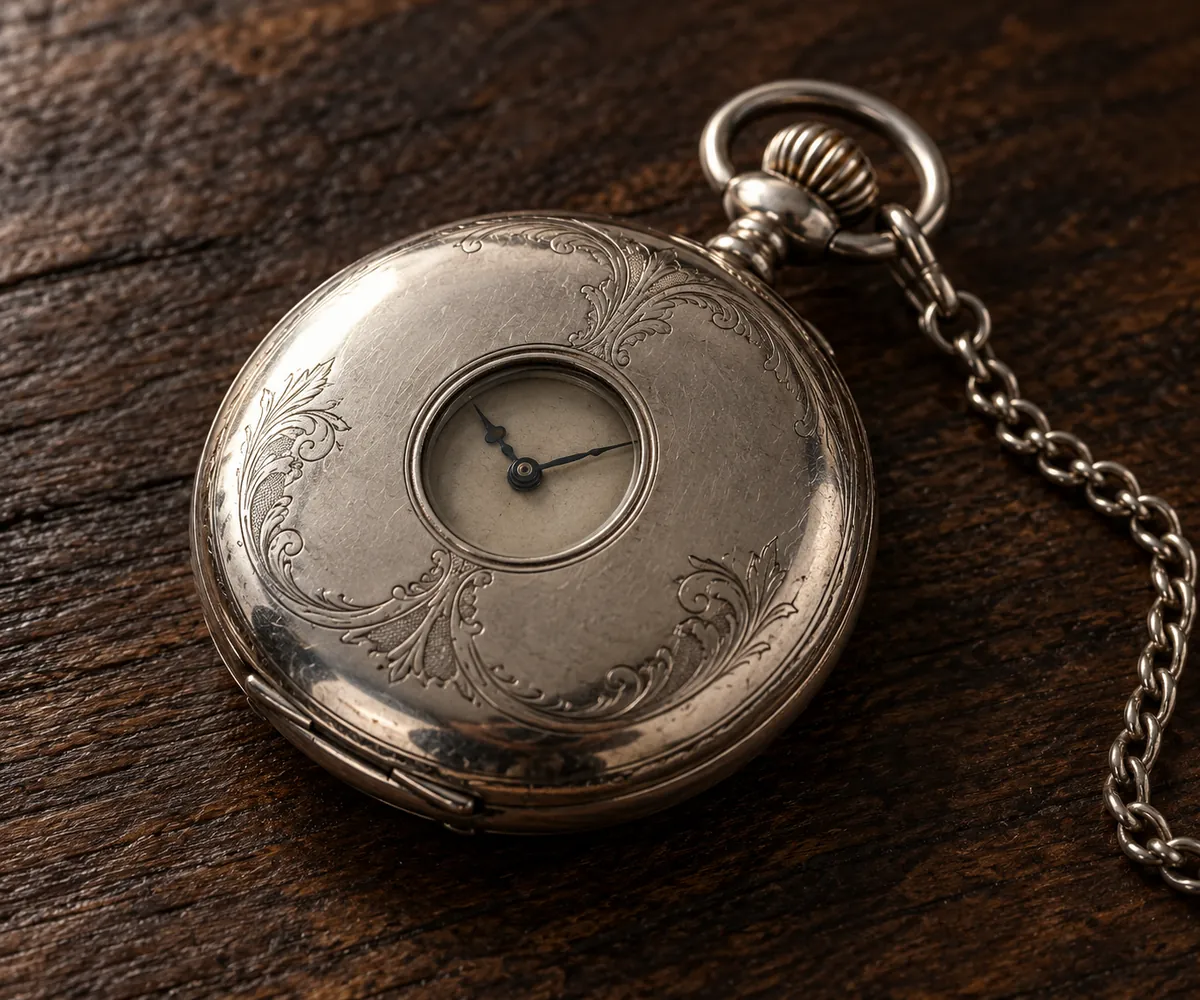
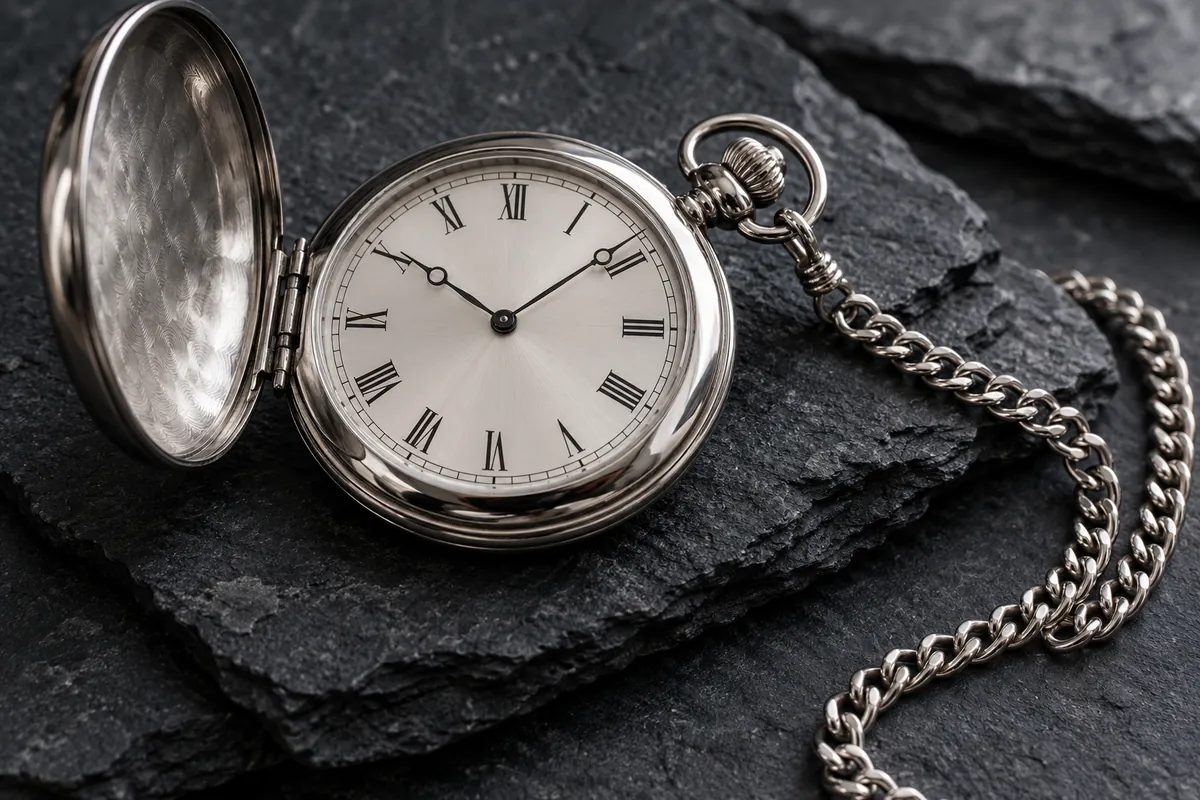
Early watches had no protection for the glass, so makers added covers. The full hunter has a solid cover that protects the whole dial, and it took its name from hunters who needed to protect the glass outdoors. The half hunter added a small window so the time could be read without opening the cover. The open face, with no cover, became popular for its clean look and easy reading. Read our guide to the half hunter pocket watch for more on the middle style.
Are old pocket watches collectible?
Yes. Collectors seek out watches by maker, period and movement, and prices vary enormously. Condition, originality and provenance all matter. If you are considering a vintage piece, take time to learn the basics and buy from a source you trust. If you simply want the look, a modern pocket watch gives the same style without the risks of a repair or a restoration.
Which makers shaped the pocket watch?
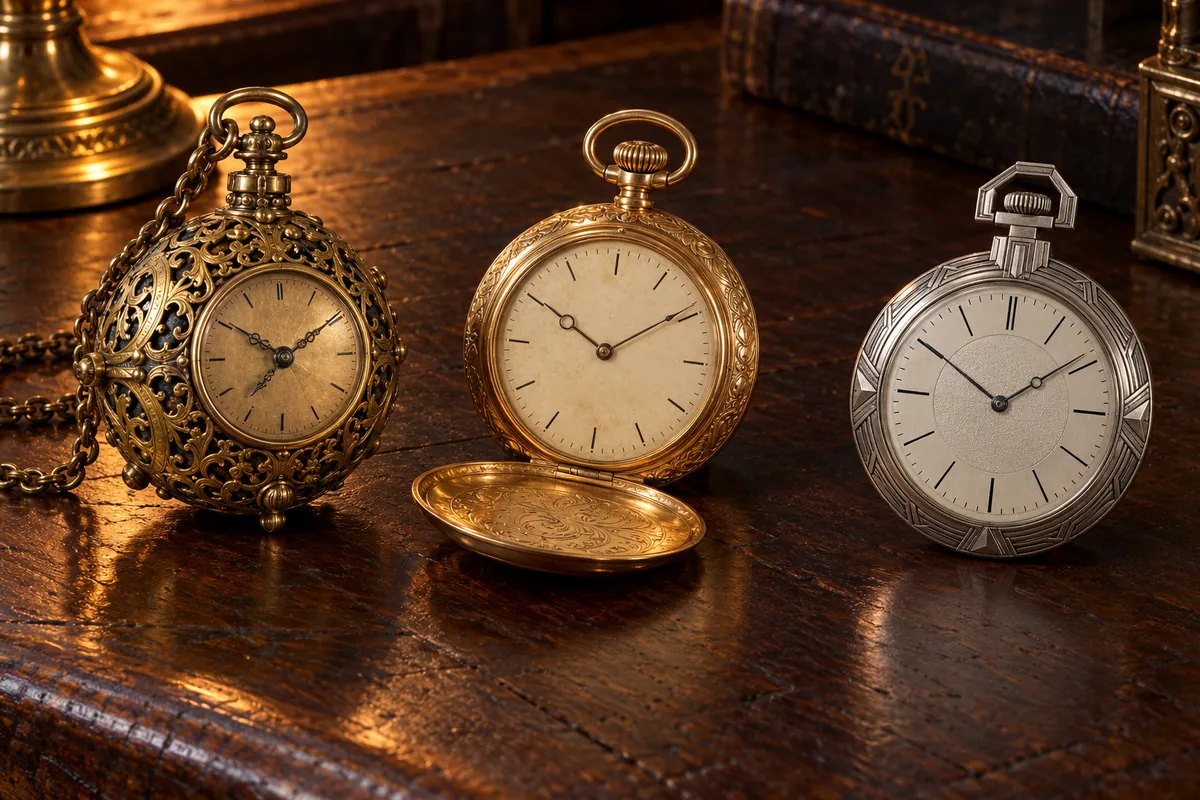
Over the centuries, watchmakers in Germany, England, Switzerland and the United States each added something to the pocket watch. English makers refined the movement and the case, Swiss makers perfected precision and finishing, and American factories introduced mass production that made a reliable watch affordable. Together they turned a luxury object into a tool that many people could own, and the pocket watch became a common sight in towns and cities.
What did a pocket watch symbolize?
For generations, a pocket watch signaled that a person was trusted with time, whether a railroad conductor, a clerk or a gentleman. It was often a gift marking a milestone, such as a graduation, a retirement or a long career, and it was passed down within families. That tradition survives today, which is why a pocket watch still feels like a meaningful present.
What do the old terms mean?
A few terms come up again and again. The crown is the knob used to set and wind the watch. The bow is the loop at the top that the chain attaches to. The fob is the chain or the small ornament on its end. A hunter case has a cover, and a half hunter has a window in it. Knowing these terms makes it easier to read descriptions and compare watches.
How did glass and cases improve?
Early watch covers were solid metal, so you had to open them to see the time. Crystal glass came into use, and later hunter and half hunter cases let owners check the time while protecting the dial. Case makers also began to decorate covers with engraving, enamel and piercing, so the outside of the watch became as admired as the movement inside. That tradition of decoration is still alive in the covers you see today.
Why are pocket watches given as gifts?
The pocket watch has long marked big moments, from a first job to a retirement. Giving one says the occasion is worth remembering, and the watch is designed to last. It is also easy to personalize with a chain, a box or an engraving, which makes it feel chosen rather than bought off a shelf. That history explains why it remains a popular present for weddings, birthdays and graduations.
How do you start with a modern one?
Choose a finish, such as silver, gold or black, then a case style and a chain. Read our articles on gold pocket watches and the silver pocket watches buyer’s guide before you decide. A watch box keeps the watch safe between wears.
FAQ
Who invented the pocket watch?
No single person is certain, but Peter Henlein of Nuremberg is commonly credited with some of the earliest portable watches.
What did people use before pocket watches?
They used sundials, water clocks and large mechanical clocks. The mainspring made portable timepieces possible.
Why did men wear pocket watches on chains?
The chain kept the watch secure and connected it to a vest buttonhole, so it could not be dropped or lost.
When did wristwatches replace pocket watches?
Wristwatches overtook pocket watches in the early 1900s, especially after the First World War.
Do people still use pocket watches?
Yes. They are worn at weddings, given as gifts and collected, and many people enjoy the heritage style.
What is a full hunter pocket watch?
A full hunter has a solid cover that protects the whole dial and opens with a press of the crown.
Ready to choose? Browse pocket watches and fob watches, watch boxes or the FOB & Co home page.